
platformer games with difficult challenges can feel brutal in the first hour, but when the difficulty is fair, they also become some of the most satisfying games to finish.
If you’re browsing for “hard platformers,” you’re usually not chasing punishment for its own sake, you want that specific mix of tight controls, readable hazards, and a learning curve that makes you better run by run. The tricky part is that not all “hard” is the same, some games are precision-heavy, others are endurance tests, and a few are just opaque.
This guide breaks down what actually makes a platformer challenging, how to self-check what kind of difficulty you enjoy, and how to choose games and training habits that won’t waste your time. I’ll also call out common traps, like confusing “long” with “hard,” or buying something that’s difficult for reasons you can’t practice.
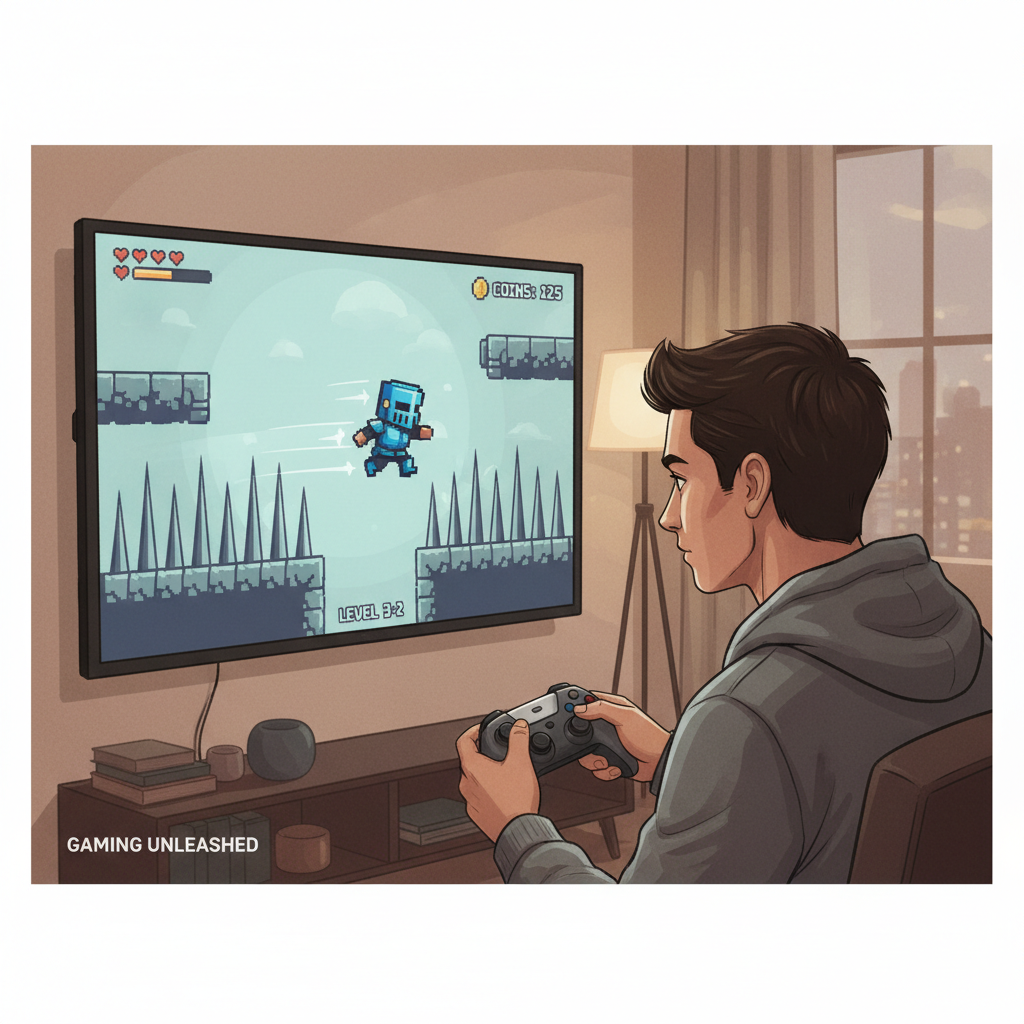
What “difficult” really means in platformers
When people say a platformer is hard, they might mean four different things, and mixing them up is how you end up with a purchase you regret.
- Precision difficulty: tiny timing windows, tight spacing, fast hazards. You fail often, but you understand why.
- Execution under stress: the moves are simple, but the pace is intense, or you must chain actions without breaks.
- Knowledge checks: you need to learn patterns, hidden mechanics, or “the safe route.” This can be great, or feel like guessing.
- Endurance and consistency: long sections with few resets, where one mistake costs a lot of progress.
In many cases, the best platformer games with difficult challenges give you quick retries, consistent physics, and clear feedback. “Hard but fair” is not a meme, it’s a design choice.
According to Entertainment Software Rating Board (ESRB)... ratings describe content, not difficulty, so you can’t use an age rating to predict how punishing a platformer feels. You’ll need to read signals inside the game itself, like checkpoint spacing and input consistency.
A quick self-check: what kind of hard do you actually enjoy?
Before you chase another notorious title, it helps to be honest about what you find fun versus what you merely tolerate.
Use this checklist
- I like repeating short rooms until I master a jump sequence.
- I’m fine dying 50 times if each attempt takes 10–20 seconds.
- I hate losing 10 minutes of progress to one slip.
- I enjoy routing, finding safer lines and consistent setups.
- I get motion fatigue from constant high-speed scrolling or heavy screen shake.
- I prefer clarity over surprise traps and “gotcha” design.
If you checked the first two boxes, you’re likely a good fit for precision-focused platformer games with difficult challenges. If you checked the “lose 10 minutes” box, you’ll probably want games with generous checkpoints or assist options that don’t ruin the core loop.
How to evaluate a hard platformer before you commit
Trailers rarely show what matters: how the game feels after your 30th death in the same room. A few practical signals usually tell you whether the difficulty stays satisfying.
Signals that the challenge is “practice-friendly”
- Fast respawns and minimal reload time
- Consistent movement (jump arcs and acceleration don’t randomly shift)
- Readable hazards (you can see what hit you)
- Checkpoints that respect effort, even if they’re strict
- Optional training spaces, challenge rooms, or time trials
Signals the difficulty may feel cheap for you
- Frequent off-screen hits, camera that fights you
- Unclear collision boxes, “I swear I landed” moments
- Long unskippable cutscenes between retries
- Difficulty spikes that change the rules without teaching
One small but telling detail, watch a raw gameplay clip with the HUD, not a highlight reel. You’ll see the retry cadence, the typical death causes, and whether the player improves or just endures.
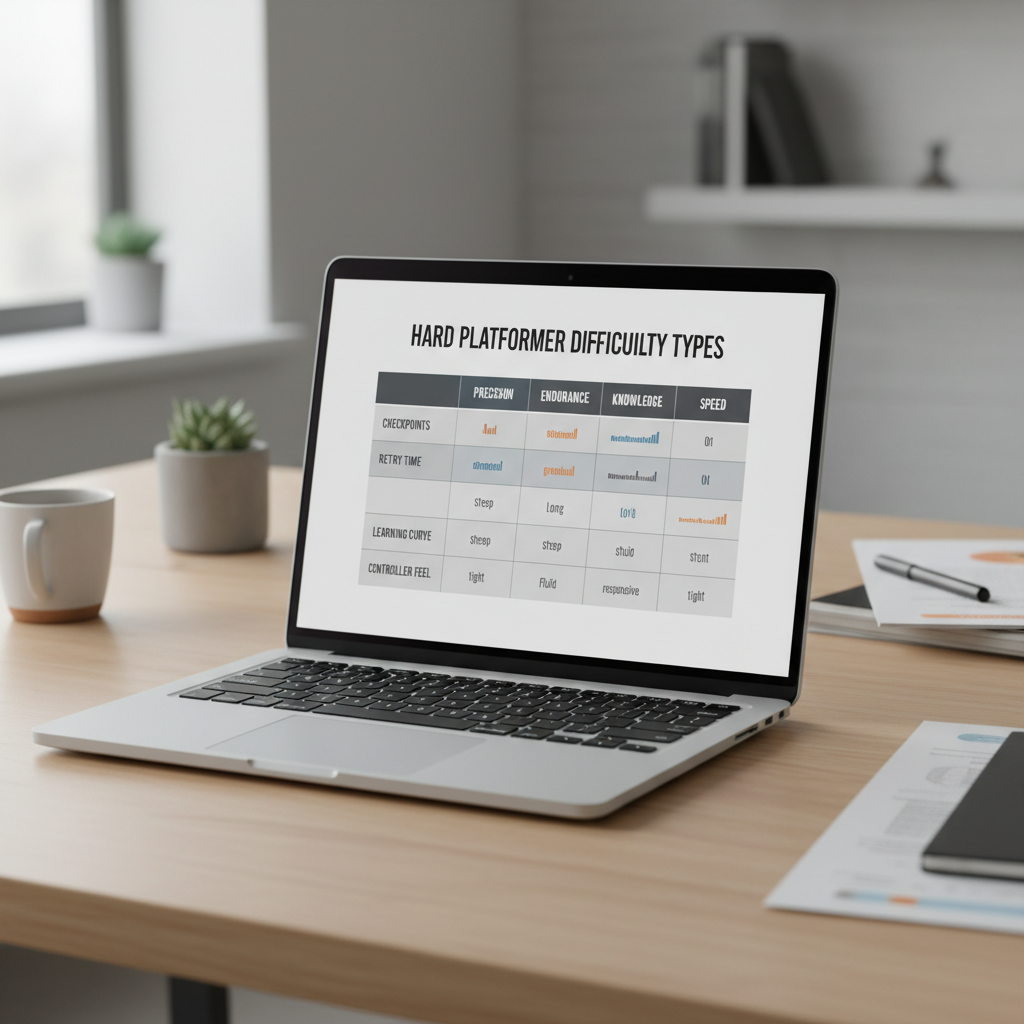
Difficulty styles at a glance (use this table)
This isn’t a list of specific titles, it’s a practical way to match your taste to a challenge style, then search accordingly.
| Challenge style | What it feels like | Who it fits | What to look for |
|---|---|---|---|
| Precision rooms | Short, intense bursts, lots of retries | Players who enjoy micro-improvement | Fast respawns, tight controls, clear telegraphing |
| Marathon levels | Long segments, consistency matters | Calm, focused players | Fair checkpoint spacing, stable camera, low downtime |
| Speed pressure | High tempo, reaction-heavy sequences | Players who like adrenaline | Predictable patterns, readable cues, minimal visual noise |
| Knowledge-gated | “Learn the trick,” then execute | Puzzle-minded players | Good teaching moments, hints, consistent rules |
Practical ways to get better (without turning it into homework)
Most people don’t fail hard platformers because they lack talent, they fail because they practice the least effective way: full-speed, full-stress attempts, over and over, while getting tilted.
Try this 15-minute training loop
- Warm-up runs (3 minutes): replay an earlier easy section to sync timing.
- Single-problem focus (7 minutes): pick one jump or hazard chain, don’t “push ahead” until it feels repeatable.
- Two clean clears (3 minutes): require two back-to-back successes before moving on.
- Cooldown (2 minutes): stop after a good attempt, not after the worst death.
Micro-techniques that help in many platformers
- Commit to a rhythm: many hazards are musical, treat them like a beat.
- Use consistent setups: same starting position, same camera framing, same jump timing.
- Reduce inputs: if a section works with fewer button presses, it often becomes more stable.
- Watch one clean run: not ten, just one, then imitate the line.
If you’re playing platformer games with difficult challenges on PC, consider checking input latency settings, V-Sync behavior, and controller polling rate. This won’t magically fix difficulty, but it can remove the “my jump feels late” confusion that ruins learning.
Common mistakes that make hard platformers feel impossible
Some pitfalls look harmless, but they quietly add hours of frustration.
- Changing your approach every attempt: experimentation is good, random variation is not. Pick one method and refine it.
- Holding the stick too long: a lot of missed landings come from oversteering in the air.
- Ignoring rest: reaction speed drops when you’re tired, and you start “confirming” your own bad timing.
- Turning on every assist at once: if the game offers assists, try one at a time so you learn what actually helps.
- Copying speedrunner routes too early: safer lines are boring, but they build consistency fast.
Many cases of “this game is unfair” are really “my inputs aren’t consistent yet.” That’s not a judgment, it’s good news, consistency can be trained.
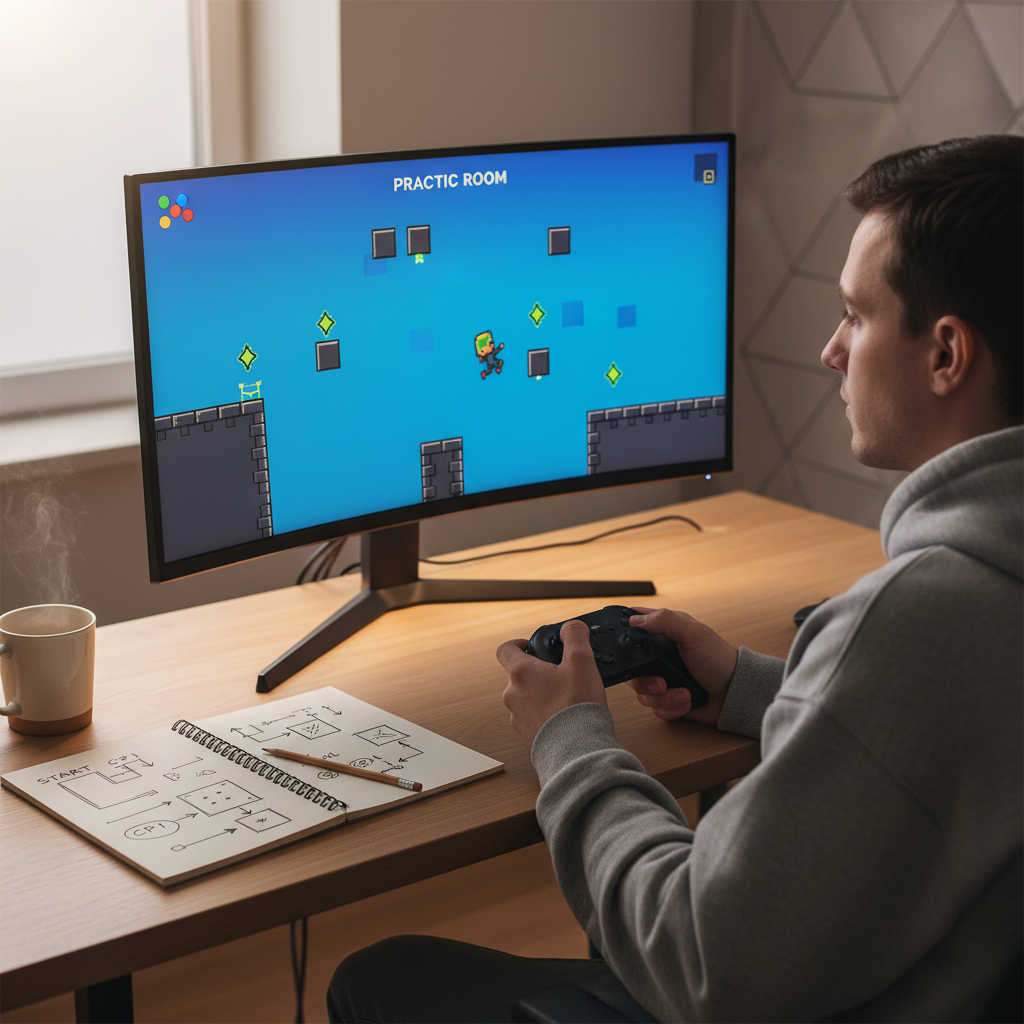
When to adjust difficulty settings or ask for help
Difficulty options and accessibility features exist for a reason, and using them doesn’t “invalidate” your experience unless you personally want a strict ruleset. The better question is whether the settings keep the core skill test intact for you.
- Good reasons to use assists: hand pain, fatigue, limited time, or a single mechanic that blocks the whole game.
- Good reasons to stay strict: you enjoy the full mastery arc, or the challenge is the main value.
If frustration turns into stress that affects sleep or mood, taking a break is usually the smarter move. If you feel persistent hand or wrist discomfort, consider stopping and consulting a medical professional, especially if symptoms repeat across sessions.
For players who want coaching, speedrunning communities and platformer-focused Discord servers can be useful, but you’ll get better feedback if you share a short clip and ask one narrow question, like “where should I place my jump here?”
Key takeaways (save this)
- Hard can mean precision, endurance, speed, or knowledge, and you should pick the kind you enjoy.
- Fast retries and clear feedback are usually the difference between “tough” and “tedious.”
- Practice one problem at a time, then demand two clean clears for consistency.
- Assists can be strategic, especially when they remove friction without removing learning.
Conclusion
Platformer games with difficult challenges are at their best when they turn failure into information, you see what went wrong, you adjust, and the game rewards that tiny improvement immediately. If you take one action after reading this, decide what “hard” you want, precision rooms or marathon levels, then evaluate any game by respawn speed, clarity, and checkpoint respect before you buy or commit.
If you’re already stuck, try the 15-minute loop for three sessions before you change games, you might be closer than you think.
FAQ
What are the best platformer games with difficult challenges for beginners?
Look for titles that are tough but offer fast respawns, clear hazards, and optional assists. You want frequent learning reps, not long walks back to the hard part.
How do I know if a hard platformer is “fair”?
Fair usually means consistent rules: the same input produces the same result, hitboxes feel readable, and deaths teach you something. Watching raw gameplay with retries is a reliable filter.
Do difficult platformers require a controller?
Often a controller feels more natural for analog movement, but many players succeed on keyboard too. The bigger factor is consistency and low input latency on your setup.
Why do I play worse after a long session?
Mental fatigue changes timing and patience, so you start forcing attempts. Short sessions with a warm-up and a stop-after-a-good-run rule usually improve results.
Are “no checkpoint” platformers always harder?
They can be, but sometimes the levels are designed around that constraint with simpler patterns. “Hard” comes from how much precision and consistency the game demands per minute.
Should I use assist mode in platformer games with difficult challenges?
If it keeps you practicing the core movement without turning the game into a slog, it’s a reasonable choice. Many players use a light assist to learn routes, then turn it off later.
What should I practice first: speed or accuracy?
Accuracy usually pays off faster. Once you can clear a section consistently at a slower pace, speed comes naturally because you stop hesitating.
If you’re trying to pick platformer games with difficult challenges that match your tolerance for retries, or you want a quick way to screen “hard but fair” options before you buy, it may help to share what you enjoy, precision rooms vs endurance runs, and your preferred platform, then narrow the field with a simple checklist.