
Best games with gladiatorial arena survival usually scratch a very specific itch: you want the drama of a packed arena, the pressure of staying alive, and the satisfaction of earning your way out of a bad situation.
If you’ve been browsing store pages, you’ve probably noticed a problem: “arena combat,” “roguelike survival,” and “gladiator” get tossed around loosely, and the actual gameplay loops can feel wildly different. Some games are about tactical duels and stamina management, others are wave defense with crafting, and a few lean hard into story and morality.
This guide focuses on games that genuinely deliver that arena-survival loop, fight, adapt, upgrade, and survive long enough to face tougher opponents. You’ll also get a quick comparison table, a short self-check to pick the right style, and practical tips to make the loop feel less punishing.
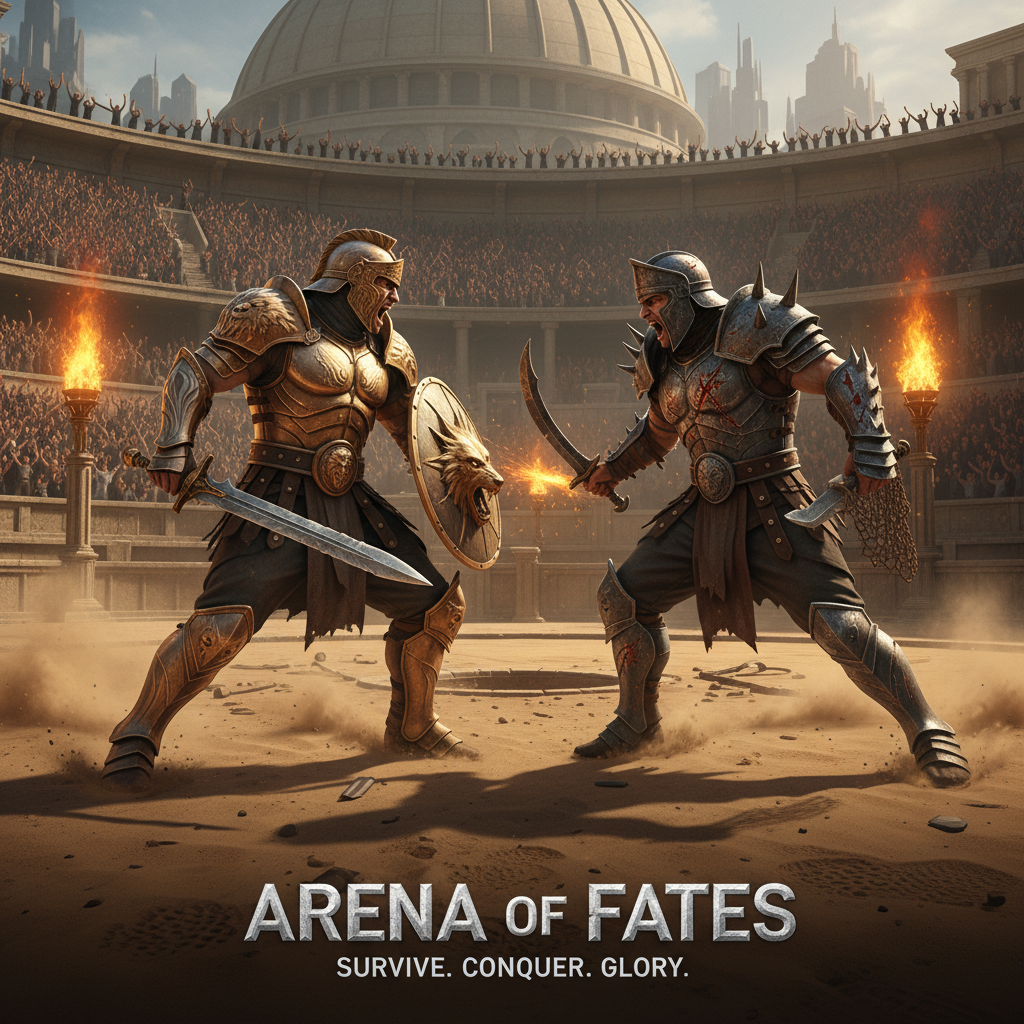
What “gladiatorial arena survival” really means (and why some games miss)
In practice, “gladiatorial arena survival” tends to mean three things at once: confined combat, escalating stakes, and limited resources. You’re not just winning fights, you’re managing risk across fights, because the run or campaign punishes sloppy decisions.
Where games often miss the mark is by offering an “arena mode” that’s basically a sandbox, fun for ten minutes, but missing progression pressure. The better titles create tension with injuries, permadeath or long-term consequences, equipment scarcity, or crowd-driven incentives that tempt you into taking dumb fights.
- Arena: enclosed spaces, predictable entry points, crowd pressure, round structure.
- Survival: attrition, limited healing, meaningful loss, and adaptation between matches.
- Gladiatorial fantasy: spectacle, loadouts, reputation, and “one more fight” escalation.
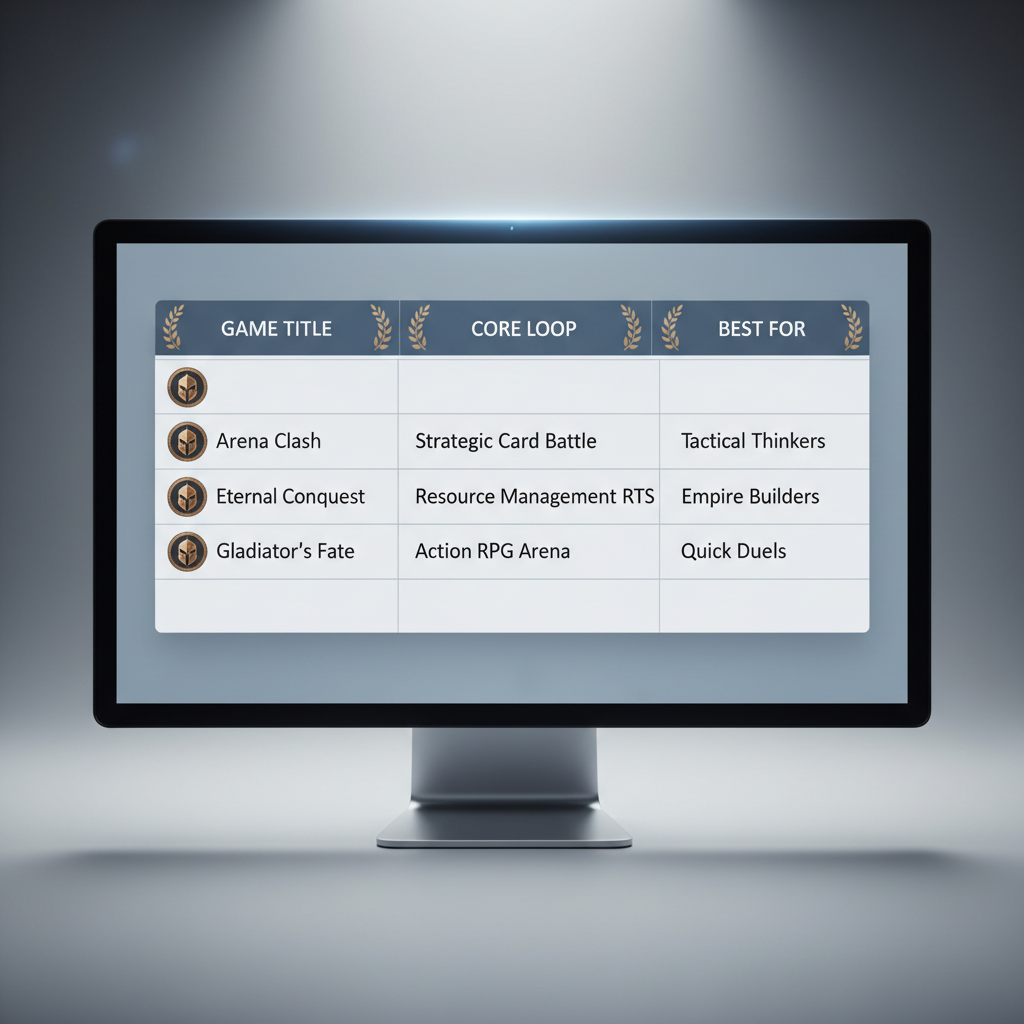
Quick comparison table: top picks at a glance
Here’s a practical shortlist. Availability can vary by platform and region, and some games evolve a lot via patches, so treat this as a “starting board,” not a final verdict.
| Game | Core loop | What it nails | Best for |
|---|---|---|---|
| Domina | Manage a ludus + fight/control outcomes | Gladiator career pressure, roster survival | Players who like strategy around combat |
| We Who Are About To Die | Physics combat + run-based arena survival | Scrappy “stay alive” momentum, emergent chaos | Roguelite fans who enjoy imperfect fights |
| Gladiator Guild Manager | Auto-battles + training + survival economy | Management decisions that actually hurt | People who prefer planning over reflexes |
| Colosseum: Road to Freedom | Story campaign + arena climb | Classic “rise from nothing” arc | Story-driven gladiator vibe seekers |
| Mount & Blade II: Bannerlord (Arena/Tournaments) | Skill building via arena fights | Grounded melee systems, progression payoff | Sandbox players who want arenas as a path |
The best games with gladiatorial arena survival (and what to expect)
Domina
If you want the “owner/manager” side of survival, Domina leans into the idea that your roster must endure. Fights matter, but so do recruiting, training, and avoiding the slow death spiral where one injury collapses your whole operation.
- Why it works: you feel the pressure of continuity, one bad match can ripple.
- Potential friction: if you want pure action control, this can feel indirect at times.
We Who Are About To Die
This one is closer to “scrape by, improvise, survive.” It’s run-based arena combat with a physics-driven edge, so fights can look messy, but that’s part of the tension. You’re constantly asking, do I take the safe payout or gamble for better gear and reputation?
- Why it works: survival feels earned, especially when you limp through a win.
- Potential friction: physics systems can frustrate players who want tight, deterministic duels.
Gladiator Guild Manager
If your favorite part is team-building and long-term planning, this is a clean fit. You recruit fighters, build roles, and try to survive a campaign where the “wrong” matchup can set you back economically.
- Why it works: management choices create real tension, not just menu busywork.
- Potential friction: less hands-on combat, more system mastery.
Colosseum: Road to Freedom
Older title, but the fantasy is straightforward: start low, fight up, survive the climb. If you mainly want the narrative vibe of gladiatorial advancement with clear progression beats, it still lands for many players.
- Why it works: classic campaign rhythm, arena identity stays front and center.
- Potential friction: age shows, especially if you expect modern combat depth.
Mount & Blade II: Bannerlord (Arena and tournaments)
This isn’t a “gladiator survival game” in the strictest sense, but its arenas can function like one if you treat tournaments as your climb. You build skill, gear, and confidence through repeated fights, and the melee fundamentals reward patience.
- Why it works: grounded melee, satisfying mastery curve.
- Potential friction: survival tension depends on how you choose to play the sandbox.
Self-check: which arena-survival style fits you?
Before you buy, it helps to be honest about what you mean by “survival.” Different players use the same word and want totally different stress.
- You want run-based survival: look for roguelite progression, randomized rewards, and “one more match” loops.
- You want career survival: prioritize management, injuries, finances, and fighter development over twitch combat.
- You want skill survival: seek systems where positioning, stamina, reach, and timing decide outcomes.
- You want story survival: campaign structure, rival arcs, and consequences will matter more than replayability.
Also check your tolerance for loss. Permadeath and heavy penalties can be motivating, but if you mainly play to decompress, “soft survival” often feels better long-term.
Practical tips to survive longer (without turning it into a grind)
Survival arenas punish impatience, but they also punish over-planning. The sweet spot is building a few reliable habits you repeat under stress.
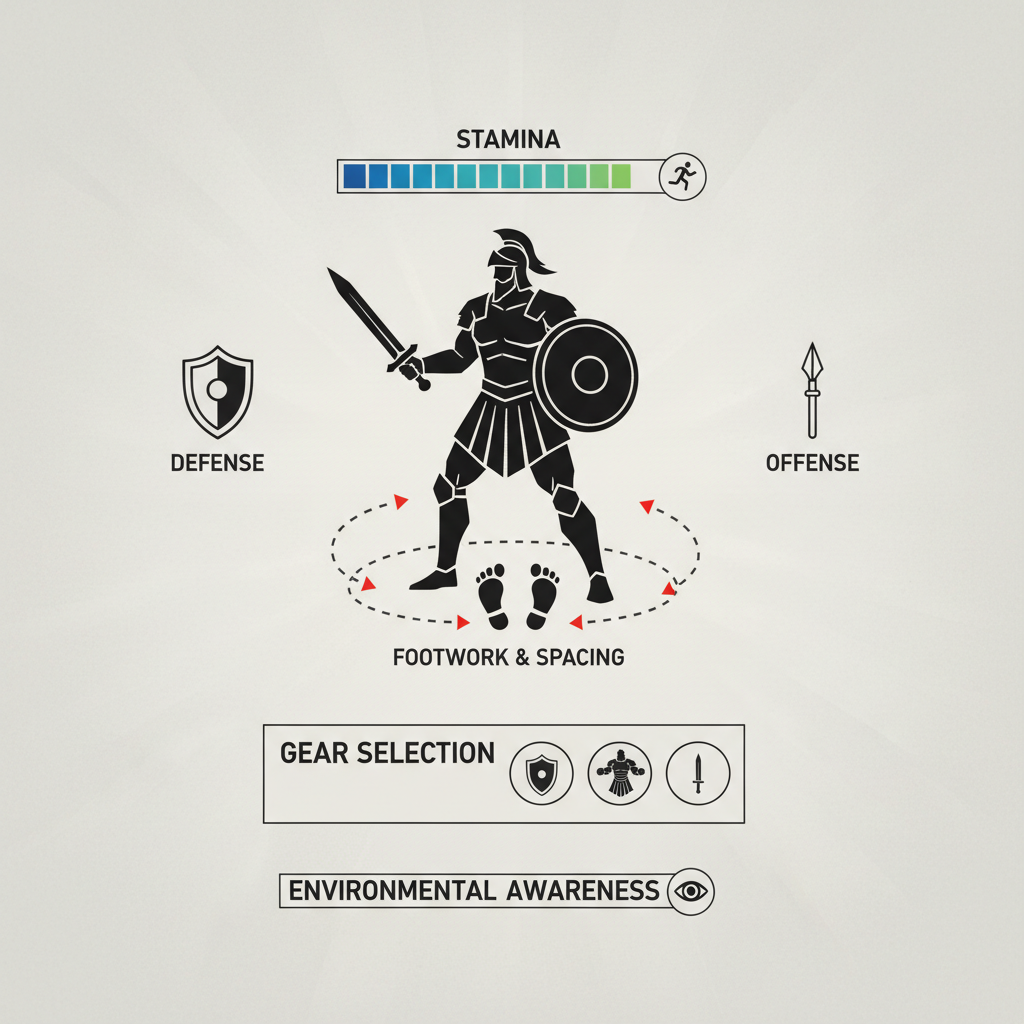
- Budget your stamina and spacing: in many melee systems, fatigue is the real health bar. Swing less, move smarter.
- Learn one safe opener: a jab, shield check, poke, or quick throw, something low-risk that buys information.
- Take “boring” rewards early: consistent healing, armor, or cash keeps a run alive more than flashy weapons.
- Track what kills you: is it ranged pressure, corner traps, or overcommitting? Fix one pattern at a time.
- Rotate loadouts: if a game has durability or injury mechanics, variety can be survival, not style.
Common mistakes when searching for arena survival games
A lot of frustration comes from buying the “right theme” with the wrong loop. The store page says gladiator, you boot it up, and it plays like something else entirely.
- Confusing wave combat with survival: endless waves can be fun, but survival usually needs meaningful carryover consequences.
- Ignoring control feel: physics-heavy combat can be brilliant or maddening, it depends on your tolerance for chaos.
- Assuming “hardcore” equals “better”: many of the best games with gladiatorial arena survival feel fair, not just brutal.
- Over-focusing on graphics: arena games live or die by readability, hit feedback, and progression clarity.
According to the Entertainment Software Rating Board (ESRB), ratings can help you anticipate violence intensity and themes, which matters if you’re sensitive to gore or want something more stylized.
When it’s worth getting help (or at least a second opinion)
If you’re stuck between two titles, a quick reality check helps: watch 10 minutes of unedited gameplay, not a trailer. Trailers sell fantasy; raw footage shows pacing, UI friction, and how often the player actually makes decisions.
For parents buying for teens, it can be smart to review rating descriptors and content notes. If anything feels unclear, you may want to consult a guardian preference, community guides, or platform parental controls rather than guessing.
Conclusion: picking your “best” arena survival game
The best games with gladiatorial arena survival tend to be the ones that match your preferred kind of pressure, run-based chaos, career management, skill mastery, or story climb. Start with the loop you want, then use the table to narrow options, and watch a bit of real gameplay to confirm the feel.
Action you can take today: pick one “must-have” feature such as permadeath, management depth, or tight melee, then choose a game that commits to it instead of dabbling.
FAQ
What are the best games with gladiatorial arena survival on PC right now?
It depends on whether you want hands-on combat or management, but titles like We Who Are About To Die, Domina, and Gladiator Guild Manager often fit the arena-survival loop in different ways.
Are there gladiator survival games that don’t require fast reflexes?
Yes. Management-focused games (where you recruit, train, and plan matchups) can deliver strong survival tension without demanding precise timing every second.
What’s the difference between an arena roguelite and a gladiator career game?
Arena roguelites emphasize short-to-mid runs with escalating randomness and reset mechanics, while career games focus on long-term continuity, injuries, finances, and progression over many matches.
Do Mount & Blade arenas count as gladiatorial survival?
They can, if you intentionally treat tournaments as your primary progression path and accept that the sandbox won’t force the same “survival pressure” as a purpose-built arena game.
How do I tell if a game is truly “survival” and not just “endless waves”?
Look for lasting consequences between fights: limited healing, injuries, resource scarcity, permadeath, or meta-progression decisions that trade short-term power for long-term stability.
What should I watch in gameplay videos before buying?
Pay attention to fight readability, how often the player has meaningful choices between matches, and whether losses feel instructive or just random. Those details usually decide enjoyment.
Are these games safe for younger players?
Many gladiator-themed games include violence themes. Check the ESRB rating and descriptors, and if you’re unsure, it’s reasonable to ask for advice from a parent or use platform parental controls.
If you’re trying to pick between two best games with gladiatorial arena survival and you want a quicker, less guessy path, share your platform, tolerance for permadeath, and whether you prefer action or management, and I can narrow it to two or three options that match your loop.