
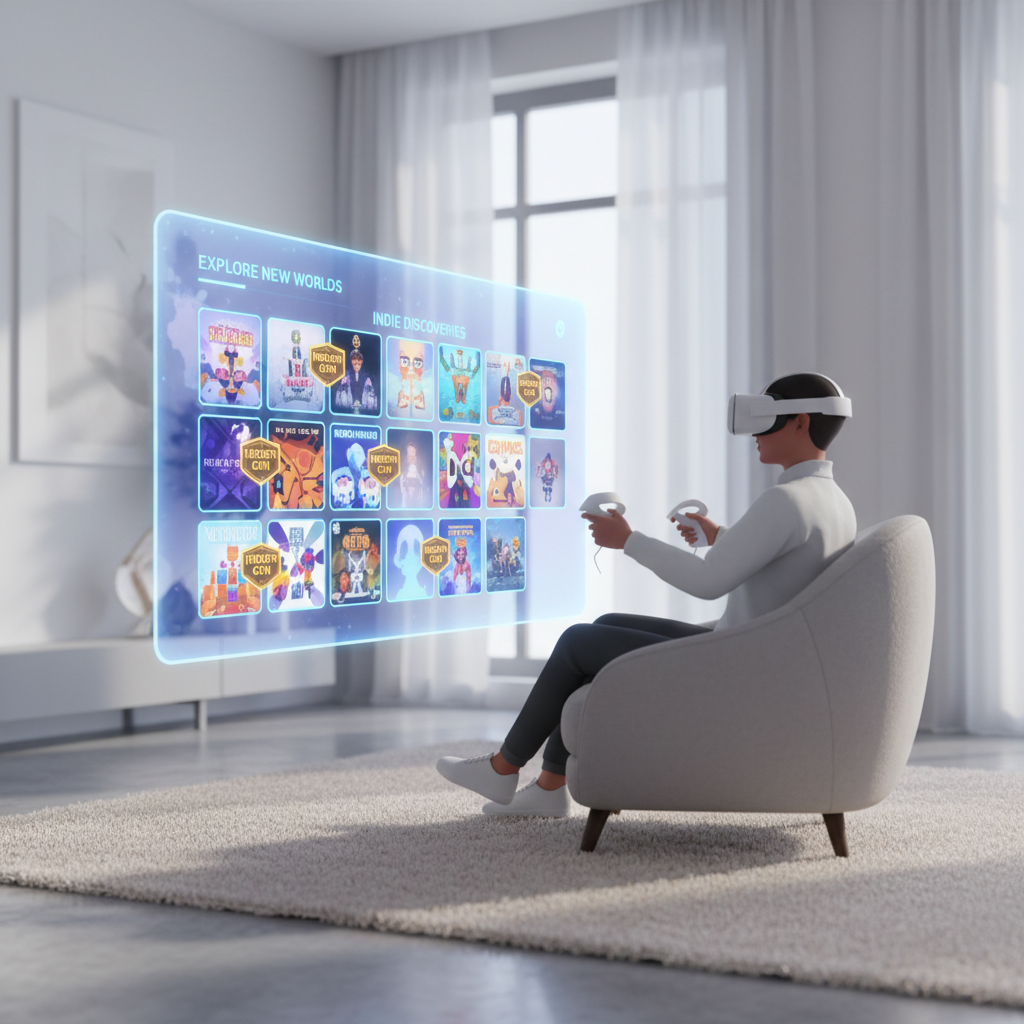
Hidden gem vr games 2026 are the titles you rarely see on front pages, yet they’re often the ones you remember because they take risks, respect your time, and feel fresh in a headset.
If you keep buying “top VR games” and bouncing off after 30 minutes, it’s usually not you, it’s discoverability. Store algorithms reward what already sells, and a lot of smaller VR teams ship incredible design that never gets the same spotlight.
This guide is built for how people actually choose VR in 2026: comfort matters, session length matters, and cross-play and mod support can matter more than photorealism. I’ll help you filter fast, then make a few smarter bets.
What usually makes a VR game a “hidden gem” in 2026
In practice, “hidden gem” rarely means low quality, it usually means one of these things: limited marketing, niche mechanics, or the game lives on a platform you don’t check daily. In 2026, a few patterns show up again and again.
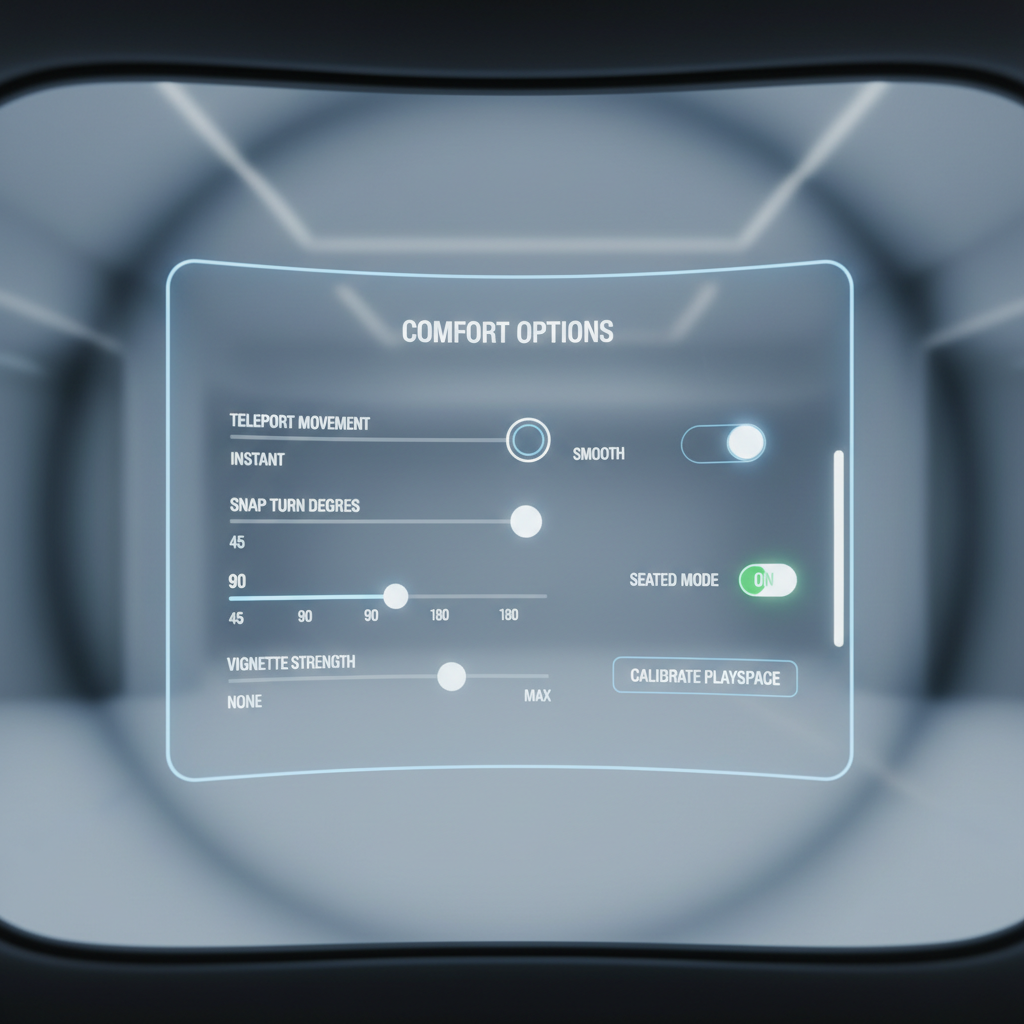
- Comfort-first design: smooth options, smart vignettes, seated modes, and readable UI, even if the art style is simple.
- A strong verb: one main action that feels great in VR, like climbing, aiming, sculpting, blocking, cooking, or piloting.
- Short sessions with real progress: 15–30 minutes that still feel meaningful, which matches how many people use VR at home.
- Community lift: a small but passionate Discord, mods, workshop items, or weekly challenges that keep it alive.
According to Meta, comfort and safety guidance such as maintaining a clear play area and using boundary systems is a core part of VR use. That matters here because a lot of “gems” become favorites precisely because they’re easy to jump into without feeling rough on your body.
A quick-pick table: hidden gem categories that tend to hit
Instead of pretending there’s one perfect list for everyone, here’s a practical way to shop: pick the category that matches your mood, space, and tolerance for motion, then go hunting within that lane.
| Hidden-gem lane | Why it works in VR | Best for | Watch-outs |
|---|---|---|---|
| Room-scale puzzlers | Hands-on interaction feels “real” | Small groups, chill nights | Can require good lighting and tracking |
| Tactical shooters (light sim) | Weapon handling and peeking feel natural | Skill progression, co-op | Online population can fluctuate |
| Rhythm & movement | Flow state, high replay value | Exercise-adjacent play | Intensity may not fit every user |
| Narrative “one-sitting” stories | Presence boosts emotion and pacing | People who finish games | Some are short, price/value varies |
| Builders & creators | Direct manipulation beats mouse/keyboard | Sandbox fans, tinkerers | UI learning curve, comfort options vary |
Common reasons you can’t “find” the good stuff
If your store feed looks samey, it’s not just bad luck. A few structural things make hidden gem vr games 2026 harder to surface.
- Algorithmic momentum: storefronts prioritize velocity, so older great titles fade unless they get a big update.
- Platform splits: standalone, PCVR, console VR, and subscription catalogs don’t share the same spotlight.
- Tag chaos: “cozy,” “immersive,” and “adventure” get overused, while truly helpful tags are inconsistent.
- Comfort filtering is weak: motion intensity is personal, but store labels are often too broad to trust.
So the trick is to stop browsing like you’re window-shopping and start browsing like you’re qualifying candidates.
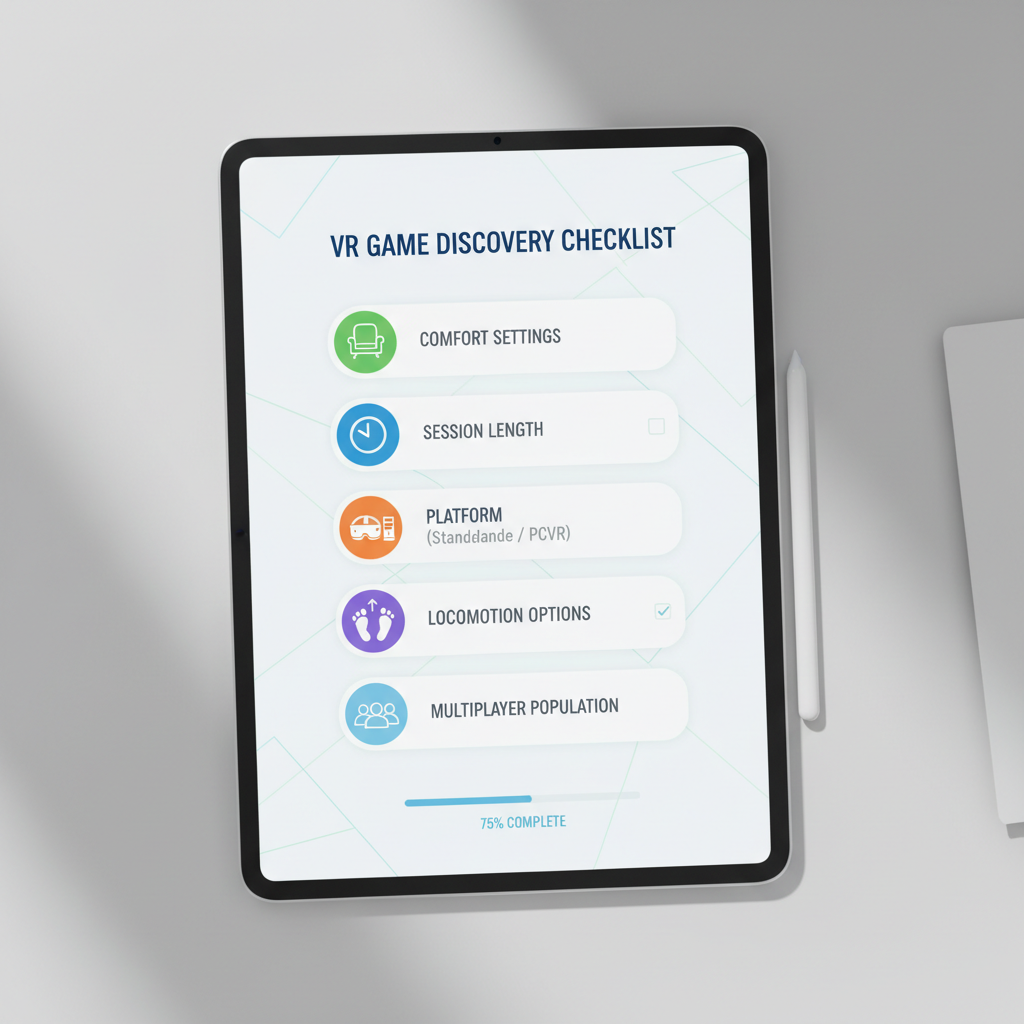
Self-check: what kind of “hidden gem” player are you?
Answer these quickly. If you’re honest, your hit rate improves immediately.
- Space reality: Do you truly have room-scale space, or are you mostly standing-in-place?
- Motion tolerance: Smooth locomotion ok, or do you need teleport and snap turn?
- Session length: 20 minutes between meetings, or 2-hour weekend blocks?
- Social energy: Solo, co-op with one friend, or competitive matchmaking?
- Friction budget: Will you install mods, tweak settings, or do you want plug-and-play?
Most “this game is overrated” arguments are really just mismatch. A cockpit sim can be a gem, but not if you only play standing and you get motion discomfort.
How to actually discover hidden gem VR games (a repeatable workflow)
This is the part people skip, then they wonder why they keep buying the same three genres. Use this as a loop you can run in 20 minutes.
1) Start with constraints, not vibes
Pick platform, comfort mode, and session length first. Then search inside that box. You’re not limiting fun, you’re protecting it.
- Standalone-only night? Filter for seated/standing, short sessions, strong comfort options.
- PCVR weekend? Look for deeper sims, mod support, experimental mechanics.
2) Read reviews for patterns, not stars
Star averages lie in VR because comfort and hardware vary. Scan for repeated phrases like “great options for locomotion,” “needs better tutorial,” “small community but friendly,” “runs hot on older GPUs.”
3) Use update cadence as a quality signal
Hidden gems often live or die by post-launch support. A small team shipping steady patches can be a better bet than a flashy launch that goes silent.
4) Cross-check with one external source
One solid community check helps. According to Steam, user reviews are aggregated over time and can be filtered by recent reviews, which is useful when a game changed dramatically after updates. Don’t treat it as absolute truth, treat it as “is the game improving or slipping.”
Run this loop and you’ll steadily build your own shortlist of hidden gem vr games 2026 without relying on whatever is trending this week.
Practical setup tips so a “gem” doesn’t bounce off you
A lot of smaller VR games assume you’ll adjust settings. That’s not a flaw, it’s reality. These tweaks usually prevent the most common drop-offs.
- Dial comfort first: snap turn, vignette, and teleport can make a great game playable. If you feel nauseated, stop and take a break, and consider asking a healthcare professional if you have ongoing symptoms.
- Fix your boundary: re-run guardian/boundary setup if your playspace changed. Tiny misalignment can ruin melee and grabbing.
- Audio matters: spatial audio is half the “presence.” Even decent earbuds can upgrade stealth, horror, and narrative games.
- Controller bindings: on PCVR, check community bindings before refund windows expire.
Common mistakes that waste money and time
These are the traps I see most often when people chase hidden gem vr games 2026 lists and end up disappointed.
- Buying outside your comfort profile: a “must-play” free-move game still won’t work if your body says no.
- Confusing novelty with depth: some concepts are amazing for 10 minutes, then the loop ends. Look for progression, levels, mods, or creative tools.
- Ignoring population reality: multiplayer gems can be brilliant, but time zones and matchmaking queues matter. Check if there’s bots, co-op, or private lobbies.
- Chasing graphics: VR presence comes from interaction and pacing, not just texture detail.
When it’s worth asking for help (or pausing the hunt)
If every new game makes you feel uncomfortable, your problem might be setup, not selection. Consider reaching out to platform support or a knowledgeable friend when you see repeated issues like tracking drift, frequent reprojection, or controller disconnects.
And if you experience persistent dizziness, headaches, or nausea during VR, pausing and consulting a healthcare professional is the safer move. According to CDC, symptoms like dizziness can have many causes, so it’s better to be cautious than to push through.
Conclusion: build your own small “trust list,” then explore
The fastest way to enjoy hidden gem vr games 2026 is to stop hunting for one magic ranking and instead build a tiny trust list: a couple curators, one storefront you like, and two genres that consistently fit your comfort and schedule.
If you do one thing today, pick a lane from the table, run the discovery workflow once, and wishlist five candidates instead of buying immediately. Your next VR night will feel less like gambling and more like taste.
Key takeaways: filter by constraints, read reviews for repeated patterns, prioritize comfort options, and treat update cadence as a real signal.
FAQ
What counts as hidden gem VR games 2026 if I only play standalone?
Usually it means titles with strong comfort design and clever interaction that don’t get banner placement. For standalone, prioritize performance stability, readable UI, and short-session loops.
How do I avoid motion sickness when trying lesser-known VR games?
Start with teleport and snap turning, keep sessions short, and stop when you feel off. Many people acclimate over time, but if symptoms persist, it’s reasonable to ask a professional rather than “power through.”
Are indie VR games more risky to buy?
They can be, mainly around polish and long-term support, but they also deliver the most interesting mechanics. Check recent update notes and recent reviews to see if the game is trending in the right direction.
Is PCVR still worth it for discovering hidden gems in 2026?
In many cases, yes, because PCVR has broader experimentation, modding, and niche sims. The tradeoff is setup complexity and hardware variance, which can affect comfort and performance.
How can I tell if a multiplayer VR “gem” will have players?
Look for signs of healthy community: recent patch notes mentioning matchmaking, active community channels, and game modes that work with small groups. If it’s strictly ranked-only, population dips can hurt.
What store filters actually matter when searching for hidden gems?
Comfort and locomotion options matter more than broad genres. Also look for session length hints in reviews, and whether the game supports seated play if you need it.
Should I trust “Top 10 hidden VR games” videos?
They’re useful for leads, not final decisions. Treat them like a wishlist generator, then validate comfort options, platform fit, and update cadence before you buy.
If you’re trying to find hidden gem vr games 2026 without wasting refunds and weekends, a curated shortlist based on your platform and comfort profile is the most “low-drama” approach, and it’s also the easiest way to discover smaller titles that genuinely click.