
Turn based strategy games for beginners are easiest to enjoy when you stop trying to “outsmart the genre” and start playing with a simple plan: take your time, read the board, and make one good decision per turn.
If you’re new, the pain point is rarely “strategy is hard.” It’s usually the menus, the terminology, and the feeling that you’re already behind because other players seem to know what every unit and icon means.
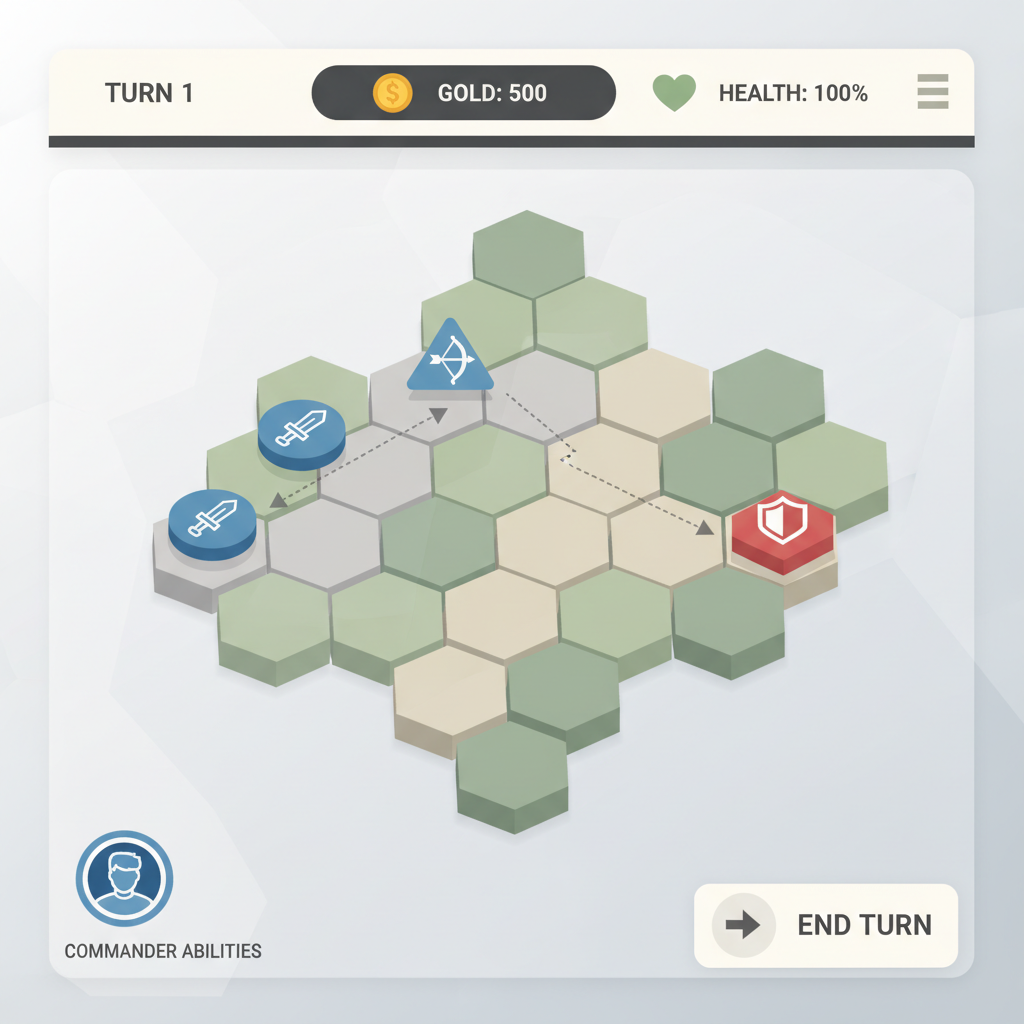
This guide focuses on the stuff that actually helps in your first few hours: what to pay attention to, how to pick a game that won’t punish learning, and a “good enough” turn routine you can reuse until it becomes instinct.
What “Turn-Based Strategy” Really Means (and Why It’s Beginner-Friendly)
In turn-based strategy, you act, then the opponent acts. No twitch reactions, no racing the clock unless the game adds a timer. That’s why this genre works well for new players who like thinking more than button speed.
Still, turn-based can feel dense because information stays on screen: stats, range, terrain, abilities, upgrades. The trick is learning what matters right now rather than trying to understand everything at once.
- Turns: a clean decision loop, you can plan several moves ahead.
- Board state: where units stand, what spaces are safe or risky.
- Resources: action points, mana, gold, cards, or production.
- Win condition: eliminate enemy, hold objectives, survive X turns, etc.
According to ESA (Entertainment Software Association)... strategy games sit inside a wider ecosystem of genres enjoyed by many different player types, so you’re not “behind” for needing a gentler onboarding. A lot of modern games add tutorials, tooltips, and difficulty options for exactly that reason.
Why New Players Struggle: Common Friction Points
Most beginner problems aren’t “bad strategy,” they’re mismatched expectations. You expect one clever move to fix everything, but turn-based games reward consistency.
- Too many options per turn: you freeze because five moves look plausible.
- Hidden rules: line-of-sight, flanking, initiative order, fog of war.
- Overextending: pushing forward because it feels proactive, then getting surrounded.
- Chasing damage: attacking because you can, instead of improving position.
- Not reading win conditions: fighting the “wrong war” and losing on objectives.
If you’ve bounced off turn based strategy games for beginners before, there’s a good chance one of these was the real issue, not your ability to learn.
Quick Self-Check: What Kind of Beginner Are You?
Pick the description that feels most like you. This helps you choose the right game style and the right practice focus.
- I like puzzles: you’ll enjoy tactical combat, tight maps, clear objectives.
- I like building: you’ll enjoy 4X or management-heavy strategy, slower pacing.
- I like stories: you’ll enjoy campaign-driven tactics with forgiving difficulty.
- I hate losing progress: you’ll want generous autosaves and short missions.
- I want PvP: you’ll need simple rulesets and a way to review mistakes.
Nothing here is “better.” It just changes which learning curve feels fair.
How to Choose a Beginner-Friendly Game (Use This Table)
When people ask for turn based strategy games for beginners, they often get a list of “famous” titles. Famous is not the same as beginner-friendly. Use the traits below to avoid buying a game that overwhelms you in the first hour.
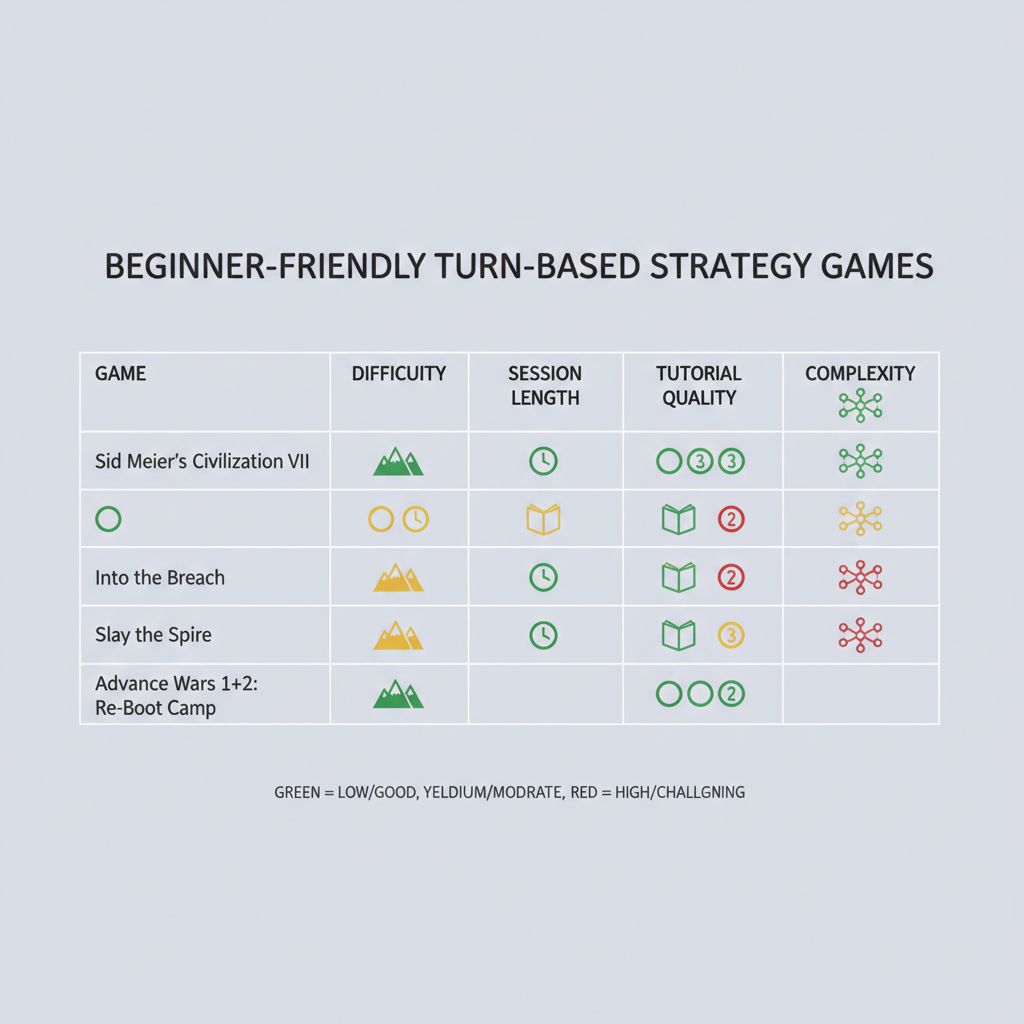
| What to Look For | Why It Helps Beginners | Simple Signal to Check |
|---|---|---|
| Clear tutorials + tooltips | You learn rules as you play, not by memorizing | Options to re-open tutorial, hover-to-explain UI |
| Short missions or skirmishes | Mistakes cost minutes, not hours | Average match length shown on store/community pages |
| Visible enemy threat ranges | Less “gotcha” punishment | Toggle to preview movement/attack ranges |
| Forgiving difficulty settings | You can practice fundamentals without perfect play | Multiple difficulty levels, assists, or accessibility options |
| Strong undo / quicksave | You can experiment safely | Undo move, reload turn, or frequent autosave |
If a game hides information, runs long sessions, and expects you to know genre conventions, it can still be great, just not always a good first stop.
A Simple “First Match” Routine You Can Reuse
Here’s a practical loop that works across many turn-based titles, from grid tactics to lighter strategy. It keeps you from spiraling into overthinking.
1) Read the win condition before you move
If the mission says “hold two points for 5 turns,” then trading units for damage might be the wrong approach. New players lose a lot of games they were “winning” in combat.
2) Spend a turn improving position, not just attacking
In many turn based strategy games for beginners, the easiest advantage comes from terrain, cover, or zone control. If you can take high ground, cover, or a chokepoint, do it even if it feels less exciting.
3) Focus fire, but only if you stay safe
Removing one enemy piece usually matters more than damaging three. But don’t chase a kill if it exposes your unit to multiple counterattacks.
4) Keep a “safety budget”
Before ending the turn, ask one question: How many enemy units can hit me next turn? If the answer is “most of them,” you probably stepped too far forward.
- Prefer trades where one of your units takes hits from one enemy, not three.
- Don’t split your team unless the objective forces it.
- Use defensive abilities early if they protect a key piece.
Practical Tips That Make Learning Faster (Without Grinding)
You don’t need hundreds of hours to “get” the genre, but you do need feedback you can understand. These habits speed that up.
- Play one faction/class for a while: variety is fun, but repetition teaches patterns.
- Lower difficulty, then raise one notch: treat it like learning a musical piece.
- Use “end turn” as a checklist moment: threat ranges, objectives, resources.
- Accept small losses: sometimes sacrificing a unit saves the mission.
- Review one mistake: not every mistake, just the one that swung the turn.
Key takeaway: when learning turn-based strategy, consistency beats brilliance. You’re building a decision habit, not hunting a perfect move.
Common Mistakes to Avoid (So You Don’t Hate the Genre)
A lot of frustration comes from doing “normal video game things” in a system that punishes them. A few course corrections help quickly.
- Reloading every time something goes wrong: you learn less and feel more pressure. Reload when you’re stuck, not when you’re uncomfortable.
- Ignoring economy: in longer formats, production and upgrades quietly win games.
- Assuming every unit should deal damage: support, control, scouting often matter more than raw DPS.
- Spreading resources thin: a solid core strategy beats six half-strategies.
According to FTC (Federal Trade Commission)... it’s worth being careful with “too good to be true” claims when buying guides, boosts, or third-party add-ons for competitive games. If something sounds like a guaranteed advantage, it may be risky or against a game’s rules.
When to Get More Help (Guides, Communities, or Coaching)
If you’re enjoying the genre but feel stuck, outside help can be efficient. The key is choosing the right kind of help for your problem.
- You keep losing to the same tactic: look for matchup explanations or counterplay basics, not advanced theory.
- You don’t understand why you lost: watch a beginner-focused replay review, ideally with paused decision points.
- You want PvP improvement: a friendly community Discord can help, but protect your privacy and don’t share accounts.
- You feel unusually anxious or frustrated: taking a break is valid; if gaming stress bleeds into daily life, consider talking with a mental health professional.
Conclusion: Your Next Two Steps
Turn based strategy games for beginners click when you pick a forgiving entry point and practice a repeatable turn routine. You don’t need to memorize every mechanic, you need a reliable way to make decent moves under uncertainty.
If you want a simple plan, do this: choose a game with clear tutorials and short missions, then play five matches focusing on just two habits, protecting your best unit and prioritizing objectives over damage.
If you’d rather not guess which game fits your taste, or you want a quick shortlist based on “puzzle vs building vs story,” I can help you narrow it down with a couple questions about what you enjoy and how long you like a session to be.